

Research and Education
One of the reasons for being of the Pterocarpus Forest as a public resource is its use as an open-air classroom and living laboratory for environmental education and research.
Open-air Classroom
The Bosque de Pterocarpus serves as an outdoor classroom where visitors of all ages can learn about the ecology, biodiversity, and conservation value of this unique freshwater wetland forest.
Through educational activities, interpretive materials, research, and direct observation, visitors
can:
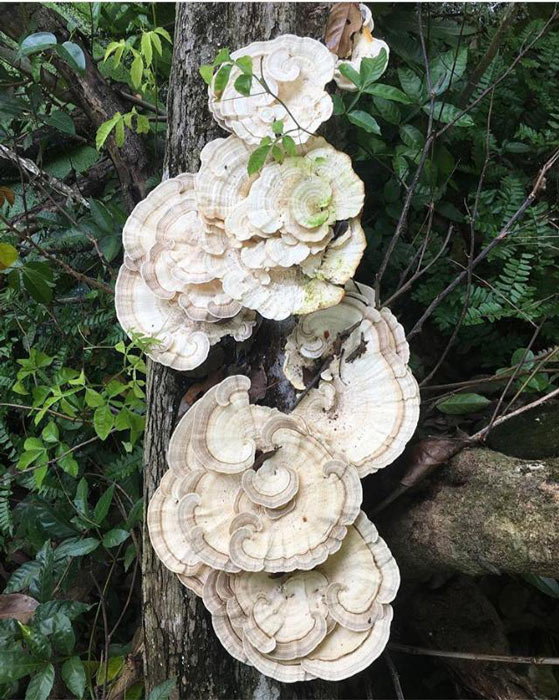
learn about the remarkable diversity of plants, animals, fungi, lichens, and other organisms documented in the Forest;
understand how this wetland ecosystem supports wildlife, maintains ecological processes, contributes to water quality and flood mitigation, and sustains biological diversity; and
develop a deeper appreciation for the conservation of the Bosque de Pterocarpus and Puerto Rico’s natural resources.
These efforts support the Forest’s conservation mission by helping build an informed community of visitors, students, residents, researchers, and citizen scientists who understand the importance of protecting places of high ecological value.
Educational resources are available both in the Forest and online, and continue to expand as new research and observations deepen our understanding of this ecosystem.
Research
In the area of research, the Forest has been available for research since before it opened to the public. Independent researchers, government scientists, faculty, and students from the University of Puerto Rico, Interamerican, Sagrado Corazón, and the former Turabo University in Gurabo have conducted scientific research within this natural gem.
The results of some of these studies are published from time to time on this website or shared on our social media.
Our collaborations with academia have allowed faculty and undergraduate and graduate students from local, national, and international natural sciences, environmental, and education faculties to research the environmental and ecological importance of wetland forests like the Pterocarpus.
Explore the Catalog of Organisms of the Pterocarpus Forest
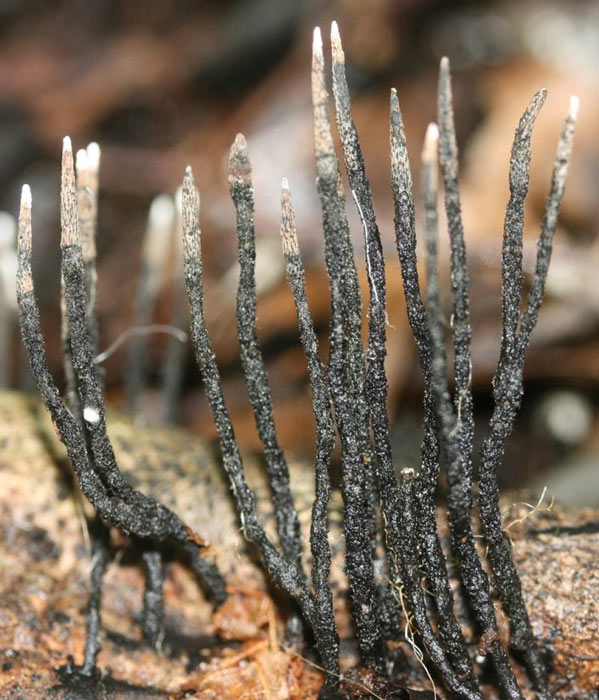
This catalog showcases the remarkable diversity of life documented in the Pterocarpus Forest –
plants, trees, animals, fungi, lichens, and other organisms observed through scientific research,
university studies, and contributions from visitors and citizen scientists.
Since the first baseline study in 2009–2010, our knowledge of the Forest has grown
significantly. More than 370 species have been documented in the Forest, and the record
continues to grow as new observations are added and identified.
Each observation adds to our understanding of this unique wetland ecosystem and helps
reinforce the Forest's value for conservation, research, and environmental education.
Promoting environmental education is an essential part of our mission and our commitment to
Puerto Rico.

Research Studies on Pterocarpus officinalis and its Forests
Listed below are studies focused on Pterocarpus officinalis (Dragonsblood Tree, locally known as Palo de Pollo) and the forested wetlands it forms in Puerto Rico and, where relevant, in other parts of the world.
Some of these studies were conducted entirely within the Pterocarpus Forest here in Humacao, such as the Turabo University graduate project that identified over 100 fungal species in the forest. In other cases, the Pterocarpus Forest served as one of several study sites or provided key reference data, such as the work on root nodulation in coastal and montane P. officinalis populations, or the discovery of new lichen species in Puerto Rico, where two of the four new species were found in this forest.
The list includes research on the tree’s ecology, physiology, genetics, fungal and animal communities, and responses to salinity, sea-level rise, and climate change. It also contains broader wetland and vegetation studies that provide important context for understanding Pterocarpus ecosystems.
Los Bejucos de Puerto Rico, Vol. I (1985) (Spanish version)
Authors: Acevedo-Rodríguez, Pedro and Roy O. Woodbury.
Summary: A Spanish-language reference on Puerto Rican vines (“bejucos”), including information relevant to wetland and forest vegetation such as Pterocarpus ecosystems.
APA citation: Acevedo-Rodríguez, P., & Woodbury, R. O. (1985). Los Bejucos de Puerto Rico: Vol. I [Book]. Pterocarpus.org.
Puerto Rico Wetland Resources (1999)
Authors: D.B. Adams, Jeromi M. Hefner, and Teresa Dopazo (translator).
Summary: A comprehensive overview of wetland resources in Puerto Rico, including information on coastal and freshwater wetlands where Pterocarpus officinalis forests occur.
APA citation: Adams, D. B., Hefner, J. M., & Dopazo, T. (Translator). (1999). Puerto Rico wetland resources [Report]. Pterocarpus.org.
Structure and Composition of Vegetation Along an Elevational Gradient in Puerto Rico (2006)
Authors: Gould, W.A.; Gonzalez, G.; Carrero Rivera, G.
Summary: This study examines how vegetation structure and species composition change across an elevational gradient in Puerto Rico, providing context for the distribution of wetland and forest types, including Pterocarpus habitats.
APA citation: Gould, W. A., Gonzalez, G., & Carrero Rivera, G. (2006). Structure and composition of vegetation along an elevational gradient in Puerto Rico [Technical report]. USDA Forest Service.
Earthworm Communities Along an Elevation Gradient in Northeastern Puerto Rico (2007)
Authors: Gonzalez, G., Garcia, E., Cruz, V., Borges, S., Zalamea, M., & Rivera, M. M.
Summary: This study describes earthworm communities across an elevation gradient in northeastern Puerto Rico, contributing to understanding soil biodiversity in forest and wetland ecosystems, including areas where Pterocarpus occurs.
APA citation: Gonzalez, G., Garcia, E., Cruz, V., Borges, S., Zalamea, M., & Rivera, M. M. (2007). Earthworm communities along an elevation gradient in northeastern Puerto Rico [Technical report]. USDA Forest Service.
The Effects of Salinity on the Dynamics of a Pterocarpus officinalis Forest Stand in Puerto Rico (2007)
Authors: Elsie Rivera-Ocasio, T. Mitchell Aide and Neftalí Ríos-López
Summary: Coastal wetland plant communities are strongly structured by water depth and salinity. Rising sea levels will cause changes in the hydro-period, surface water salinity, and saltwater intrusion in coastal areas, which will reduce the distribution of forests in these areas.
The authors studied the dynamics of a Pterocarpus officinalis stand in Puerto Rico over a 9-year period. They observed differences in plant growth, recruitment, and mortality across a salinity gradient within a 1-ha plot. In areas of high salinity, recruitment, juvenile density, and growth rates of juveniles and adults were lower.
The detrimental effect of salinity was also observed in a growth experiment: seedlings in 5% and 10% salinity treatments had higher mortality, slower growth, and less above- and below-ground biomass than control seedlings (0%). In addition, an increase from 0 to 1% in salinity resulted in approximately 50% less nodulation in seedlings.
Low recruitment in high salinity areas and lack of recruitment in adjacent grasslands will further reduce the distribution of this forest type. Although some ecosystems can respond to changing conditions by migration to more favorable areas, this is not the case with P. officinalis, and thus, restoration efforts are needed to re-establish this species where it occurred historically.
APA citation: Rivera-Ocasio, E., Mitchell-Aide, T., & Ríos-López, N. (2007). The effects of salinity on the dynamics of a Pterocarpus officinalis forest stand in Puerto Rico. Journal of Tropical Ecology, 23(5), 923–933.
Root Nodulation in the Wetland Tree Pterocarpus officinalis Along Coastal and Montane Systems of Northeast Puerto Rico (2008)
Authors: Rachel Pérez and Tamara Heartsill Scalley
Summary: Today, remnant wetlands are limited to small areas that are threatened by rising sea levels. The authors examined the root nodules of P. officinalis in montane and coastal sites and at 0, 10, and 20 cm from the soil surface to determine if site conditions relate to the formation and characteristics of nitrogen-fixing nodules.
They found no significant difference in nodule quantity between montane and coastal ecosystems. However, although all montane sites experienced nodule growth, some coastal sites did not. Montane sites had 96.3% of nodules active, whereas coastal sites had 82.2%. Nodule mass and diameter were significantly larger near the soil surface and in montane sites. More research is needed to understand if nitrogen-fixing and accumulation rates also differ between coastal and montane sites where P. officinalis occurs.
Studying the presence, distribution, and potential environmental conditions related to nodule formation will be helpful in developing management strategies and conservation initiatives to maintain this species and the wetland forests in which it occurs.
APA citation: Pérez, R., & Heartsill-Scalley, T. (2008). Root nodulation in the wetland tree Pterocarpus officinalis along coastal and montane systems of northeast Puerto Rico. Journal of Tropical Ecology, 24(6), 1025–1034
Spatial and Temporal Heterogeneity of Rainfall Inorganic Ion Composition in Northeastern Puerto Rico (2013)
Authors: Medina, E.; Gonzalez, G.; Rivera, M. M.
Summary: This study examines how inorganic ion composition in rainfall varies across space and time in northeastern Puerto Rico, providing context for nutrient inputs to forest and wetland ecosystems, including Pterocarpus habitats.
APA citation: Medina, E., Gonzalez, G., & Rivera, M. M. (2013). Spatial and temporal heterogeneity of rainfall inorganic ion composition in northeastern Puerto Rico [Technical report]. USDA Forest Service.
Four New Species of Oedogonium (Ascomycota: Ostropales) from Vulnerable Forest Ecosystems in Puerto Rico (2013)
Authors: Mercado-Diaz, J.A.; Gould, W.A.; Gonzalez, G.; Lucking, R.
Summary: This paper reports four new species of Oedogonium fungi from vulnerable forest ecosystems in Puerto Rico, contributing to understanding fungal diversity in habitats that include or overlap with Pterocarpus forests.
Mercado-Diaz, J. A., Gould, W. A., Gonzalez, G., & Lucking, R. (2013). Four new species of Oedogonium (Ascomycota: Ostropales) from vulnerable forest ecosystems in Puerto Rico. USDA Forest Service Research Paper, 46629.
Species Composition and Differences in Diversity Among the Pterocarpus officinalis Forested Wetlands of Puerto Rico (2013)
Authors: Rusty A. Feagin, Frances Toledo-Rodríguez, Ricardo J. Colón-Rivera, Fred Smeins, and Roel Lopez
Summary: Pterocarpus officinalis (Dragonsblood Tree, known as Palo de Pollo in Puerto Rico)-dominated forests are a rare ecosystem, found only in fifteen locations in Puerto Rico, most of which are adjacent to the coast and at risk from sea-level rise, nutrient pollution, upstream hydrological modifications, and deforestation.
Prior to this study, there was little information on the diversity of organisms inhabiting these forests. The central objectives were to examine the diversity and species composition of three Pterocarpus forests in Puerto Rico located in Humacao, Patillas, and Dorado; compare and contrast diversity among the three forests; and identify possible differences caused by human influences or natural factors.
Visual surveys, vegetation plots, pitfall traps, insect traps, nets, and audio recordings were used to collect records of birds, mammals, amphibians and reptiles, invertebrates (insects, crustaceans, mollusks), plants, and fungi.
The Dorado Pterocarpus forest is only 2.4 ha in extent, but is the richest and most diverse; Humacao, the largest tract sampled at 150 ha (63% of the total Pterocarpus coverage in Puerto Rico), is the least rich and diverse.
The most obvious factor influencing richness and diversity among the forests is the adjacent land cover and history of the sites. Saltwater intrusion (Humacao), freshwater inflow from watersheds (Humacao, Dorado), and emerging spring water sources (Patillas) may also alter richness and diversity.
The results will be useful for planning appropriate management of this ecosystem in the context of ongoing sea-level rise, climate change, nutrient pollution, upstream hydrological modifications, and deforestation.
Feagin, R. A., Toledo-Rodríguez, F., Colón-Rivera, R. J., Smeins, F., & Lopez, R. (2013). Species composition and differences in diversity among the Pterocarpus officinalis forested wetlands of Puerto Rico. Caribbean Naturalist, 4, 1–22.
Hydrological Modification, Saltwater Intrusion, and Tree Water Use of a Pterocarpus officinalis Swamp in Puerto Rico (2014)
Authors: Colón-Rivera, R. J., Feagin, R. A., West, J. B., López, N. B., & Benítez-Joubert, R. J.
Summary: This study looked at how changes in water flow and saltwater intrusion affect a Pterocarpus officinalis swamp in Puerto Rico. The researchers measured how trees use water and how the swamp’s hydrology has been altered by human modifications and natural processes. They found that saltwater intrusion and altered water flow stress the trees and change how the swamp functions. This work is important for understanding how to manage and protect Pterocarpus forests under changing water and salinity conditions.
APA citation: Colón-Rivera, R. J., Feagin, R. A., West, J. B., López, N. B., & Benítez-Joubert, R. J. (2014). Hydrological modification, saltwater intrusion, and tree water use of a Pterocarpus officinalis swamp in Puerto Rico. Estuarine, Coastal and Shelf Science, 147, 156–167.
Short-Term Precipitation and Temperature Trends Along an Elevation Gradient in Northeastern Puerto Rico (2015)
Authors: Van Beusekom, A.; Gonzalez, G.; Rivera, M.
Summary: This study documents short-term precipitation and temperature trends across an elevation gradient in northeastern Puerto Rico, providing climate context for wetland and forest ecosystems, including Pterocarpus habitats.
APA citation: Van Beusekom, A., Gonzalez, G., & Rivera, M. (2015). Short-term precipitation and temperature trends along an elevation gradient in northeastern Puerto Rico [Technical report]. USDA Forest Service.
Wide Variety of Fungi in the Pterocarpus Forest in Palmas del Mar (2015)
Authors: Cantrell-Rodriguez, S., & Turabo University Graduate Students
Summary: Eight graduate students from Turabo University, under the guidance of Professor Sharon Cantrell-Rodriguez (an expert in mycology and professor in Turabo’s School of Natural Science and Technology), identified a total of 103 species of fungi in the Pterocarpus Forest in Palmas del Mar, Humacao, as part of a three-month study. This work greatly expands knowledge of fungal diversity in Pterocarpus officinalis forests.
APA citation: Cantrell-Rodriguez, S., & Turabo University Graduate Students. (2015). Wide variety of fungi in the Pterocarpus Forest in Palmas del Mar. Pterocarpus.org.
The Importance of Pterocarpus in Puerto Rico for the Environment (2015)
Author: Lugo, A. E.
Summary: This is a video recording of a 2015 conference presentation by Dr. Ariel Lugo, an expert on Pterocarpus forests, about the environmental importance of Pterocarpus in Puerto Rico. It provides a public-friendly overview of the ecosystem’s role and value.
APA citation: Lugo, A. E. (2015). The Pterocarpus in Puerto Rico: Importance for the environment [Video recording of conference presentation]. Pterocarpus.org.
Landscape-Level Consequences of Rising Sea Level on Coastal Wetlands: Saltwater Intrusion Drives Displacement and Mortality in the Twenty-First Century (2019)
Authors: Yu, M., Rivera Ocasio, E., Heartsill Scalley, T., Davila Casanova, D., Rios López, N., & Gao, Q.
Summary: This study examined a freshwater swamp dominated by Pterocarpus officinalis in Sabana Seca, Toa Baja, Puerto Rico, to understand how rising sea levels and saltwater intrusion are affecting the forest. The researchers found that trees in areas with higher salt intrusion showed higher mortality and lower recruitment (fewer new trees). Drought also worsened stress on the trees. The work shows that coastal Pterocarpus forests are vulnerable to climate change and could be replaced by mangroves or open water if saltwater intrusion continues.
APA citation: Yu, M., Rivera Ocasio, E., Heartsill Scalley, T., Davila Casanova, D., Rios López, N., & Gao, Q. (2019). Landscape-level consequences of rising sea-level on coastal wetlands: Saltwater intrusion drives displacement and mortality in the twenty-first century. Wetlands.
Genomic and Physiological Basis of Structural and Foliar Trait Variation in Tropical Species Pterocarpus officinalis: Implications for Restoration in Future Drier Climates (2025)
Authors: Collins, S. M., Grady, K. C., Lorenzana, G. P., Baesen, K., Figueroa Corona, L., Axelsson, E. P., Dixit, A., & De La Torre, A. R.
Summary: This study used whole-genome sequencing of 109 young Pterocarpus officinalis trees from 12 locations across Puerto Rico to understand how genetic variation connects to local climate conditions like rainfall, elevation, and temperature. The researchers identified genetic regions linked to water-use efficiency and other traits important under drier future climates. The results help guide restoration efforts by showing which seed sources are best suited for specific sites and how to maintain genetic diversity while rebuilding Pterocarpus forests.
APA citation: Collins, S. M., Grady, K. C., Lorenzana, G. P., Baesen, K., Figueroa Corona, L., Axelsson, E. P., Dixit, A., & De La Torre, A. R. (2025). Genomic and physiological basis of structural and foliar trait variation in tropical species Pterocarpus officinalis: Implications for restoration in future drier climates. Evolutionary Applications, 18(5), e70102.
Stable Isotopes and Saltwater Intrusion in the Pterocarpus officinalis Forest at Humacao Nature Reserve (ongoing project, 2024–2026)
Author: López Figueroa, N. B.
Summary: This is an active research project at the Humacao Nature Reserve, where Pterocarpus officinalis is the dominant tree in a system of brackish lagoons. The project uses stable isotopes of water (δ²H and δ¹⁸O) to detect and track saltwater intrusion into the lagoons across seasons. The researchers are also studying how increasing salinity affects forest health, noting signs of tree decay because Pterocarpus officinalis has low tolerance for salt. The results will help managers understand how coastal changes are affecting this rare forest and guide conservation actions.
APA citation: López Figueroa, N. B. (ongoing). Stable isotopes and wetlands: Saltwater intrusion in the Dragon’s Blood Tree (Pterocarpus officinalis) forest at Humacao Nature Reserve
Conferences
The Pterocarpus in Puerto Rico: Importance for The Environment
Author: Dr. Ariel Lugo, Director of the International Institute of Tropical Forestry (USDA United States Forest Service)
Dr. Lugo has worked on a wide range of tropical and sub-tropical ecosystems: hardwood forests, mangroves, floodplain wetlands, sand pine forests, prairie lakes and palm wetlands. His current research focuses on the role of tropical forests in global processes, and on comparisons between tropical tree plantations and natural forests.