

STOP #4
STOP #4
STOP #4
Listen to the Audio
Pterocarpus Forest Functions
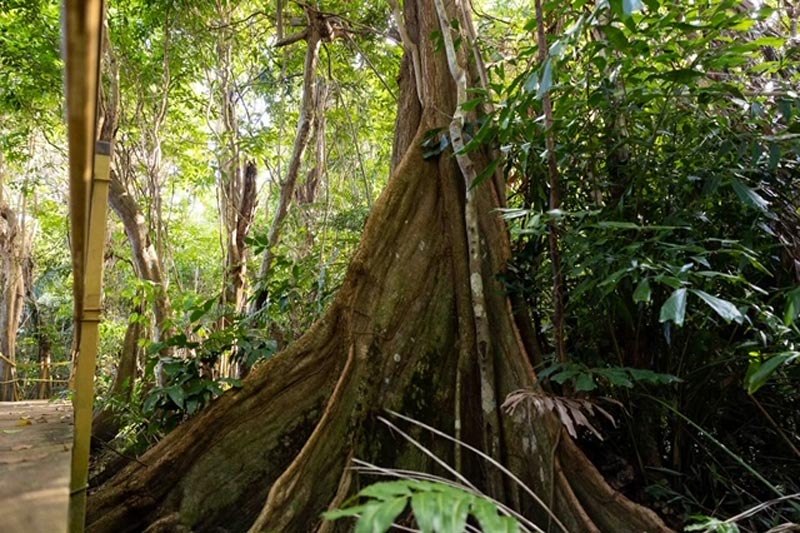
Pterocarpus forests are swamp ecosystems that are seasonally inundated with freshwater. The Pterocarpus officinalis, a native tree that is the predominant species in this type of wetland in Puerto Rico, has large buttress roots that allow it to grow in flooded soils.
In Puerto Rico, forested coastal wetlands cover approximately a mere 1% of the island’s territory. Of these, 67 km² are mangroves and 2.6 km² are Pterocarpus swamps. It is not surprising, therefore, that unknown to most people, these Pterocarpus forests are among the most important freshwater ecosystems in many tropical countries.
These lowland wetlands provide important ecosystem services such as:
• maintaining biological diversity in coastal areas;
• providing habitat, shelter and food for local and migrant birds, which also take advantage of the high diversity of insects present;
• reducing the impact of severe floods during heavy rain events and extreme weather conditions; and
• maintaining water quality.
It may come as a surprise, particularly to visitors, but there are perceptible changes in Puerto Rico’s seasons over the course of a year. They are different from, say the northeast United States, but they do occur. As a result, the flora and fauna you are most likely to see may vary with the time of year and water level.
During a typical Puerto Rico wet season, from April to November, daily rains accumulate. The island’s wettest month is August with 7 inches (18cm) of rain. Water seems to be everywhere. Here in the Forest, it may even cover the boardwalk. It may appear deep, but it is relatively shallow. These nourishing waters signal a time of recharge for the forest swamp.
Trees and plants leaf out and flower. Freshwater animals, such as frogs, have plenty of room and optimum conditions to reproduce and prosper.
In late November, the weather pattern shifts. Rainfall decreases, water levels drop, and the dry season begins which lasts from December to March.