

STOP #10
STOP #10
STOP #10
El Bosque de Pterocarpus
Listen to the Audio
The Aftermath of Hurricane María
(September 20, 2017)
Hurricanes a part of life in the tropics, and in Puerto Rico. Traditionally, in fact, most hurricanes in Puerto Rico have made landfall in or near Humacao, here on Puerto Rico’s eastern shore, as they finish their trek across the Atlantic from the west shores of Africa. Until 2017, Hurricane Georges was the last major hurricane (category 3) to strike the area, back in 1998, and cause significant damage to Puerto Rico and to the Pterocarpus Forest. Georges, by the way, was the worst hurricane to hit Puerto Rico since hurricane “Saint Cyprian” in 1932. But the Forest made a near total recovery from Georges.
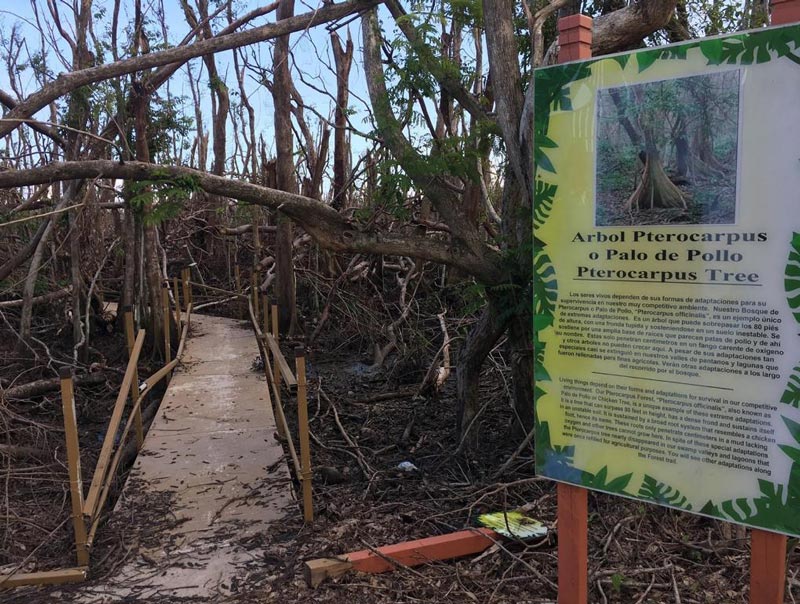
Hurricanes maintain the island’s vegetation in constant flux. Defoliation, stem breakage, and uprooting of trees occur are some of the natural consequences that occur after this type of phenomenon. Post-storm response includes the rapid recovery of tree foliage and lost branches, the regeneration of secondary species, and the growth of vines and herbs in forest openings. The 55-acres of Pterocarpus were virtually destroyed. Thousands of trees were lost, including many old Pterocarpus. The killer storm wreaked havoc upon the habitat of the forest’s 44 species of flora and 52 fauna. We still don’t know if all of them survived. The 1.5-mile nature walk upon which you have been walking was severely damaged, with sections twisted beyond repair and others blown away. Almost all of the nearly 100 interpretive signs, essential
to the Forest’s educational mission, were ruined or lost.
As you look from this point, you can observe some of the lasting damage done by Hurricane María on September 20, 2017. María, a high-end Category 4 storm, made landfall at Yabucoa, a mere seven miles from the Pterocarpus Forest, devastating Palmas del Mar, Humacao and the area where you are standing — and most of Puerto Rico. Locally, María packed maximum sustained winds of more than 145 miles per hour, accompanied by torrential rains, causing massive storm surge flooding along the coast, which is less than a mile from the Forest.
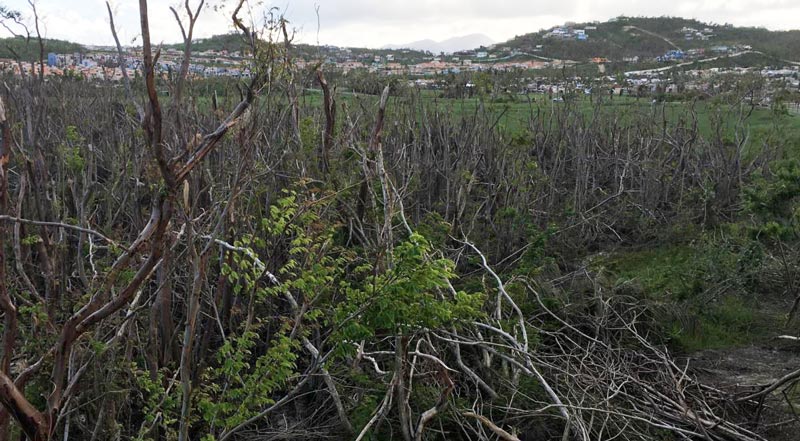
The 55-acres of Pterocarpus were virtually destroyed. Thousands of trees were lost, including many old Pterocarpus. The killer storm wreaked havoc upon the habitat of the forest’s 44 species of flora and 52 fauna. We still don’t know if all of them survived. The 1.5-mile nature walk upon which you have been walking was severely damaged, with sections twisted beyond repair and others blown away. Almost all of the nearly 100 interpretive signs, essential to the Forest’s educational mission, were ruined or lost.
The Friends of the Forest and PHA Homeowners removed fallen trees and tons of debris in and around the Forest, left behind in the wake of the Hurricane, in the areas that had been most accessible to visitors, to protect the forest from further destruction. In the same area, many trees were salvaged and fallen trees replanted, caring for surviving ones, and planting new endemic and native trees to replace those that were lost.
Before you, however, is a testimony to the destruction caused by María, left to nature. This spot is one from which you will be able, over time – possibly decades – witness the ecosystem’s comeback.